Enabling marketers to make confident, data backed budget decisions before spending by turning complex performance data into clear, scenario driven insights.
Enabling marketers to make confident, data backed budget decisions before spending by turning complex performance data into clear, scenario driven insights.
70%
70%
70%
Paid clients onboarded
Paid clients onboarded
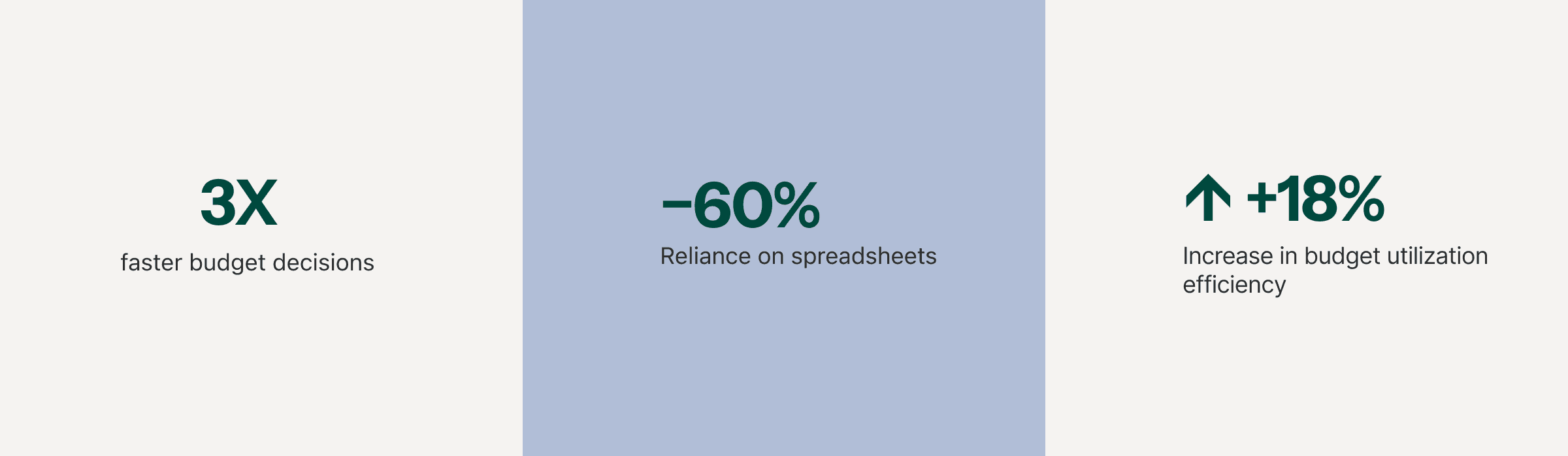
3X
3X
3X
faster budget decisions
faster budget decisions
↑ High
↑ High
↑ High
Planner confidence
Planner confidence
Role
Role
Lead Product Designer
Lead Product Designer
Timeline
2025-Present
2025-Present
Team
Design, PM, Engineering
UX Designer, Sr Designer, Founder, PM
Deliverables
Flows, HiFi mockups, Component Specs, Handoff
Flows, HiFi mockups, Component Specs, Handoff
Need for a design intervention
Need for a design intervention
The interface lacked perceived credibility and system trust, making it feel insufficiently reliable for high stakes decision making.
The interface lacked perceived credibility and system trust, making it feel insufficiently reliable for high stakes decision making.
How might we design a structured and inclusive support system that meets the diverse needs of students, enabling them to navigate the complexities of career decisions seamlessly and make timely, informed choices?
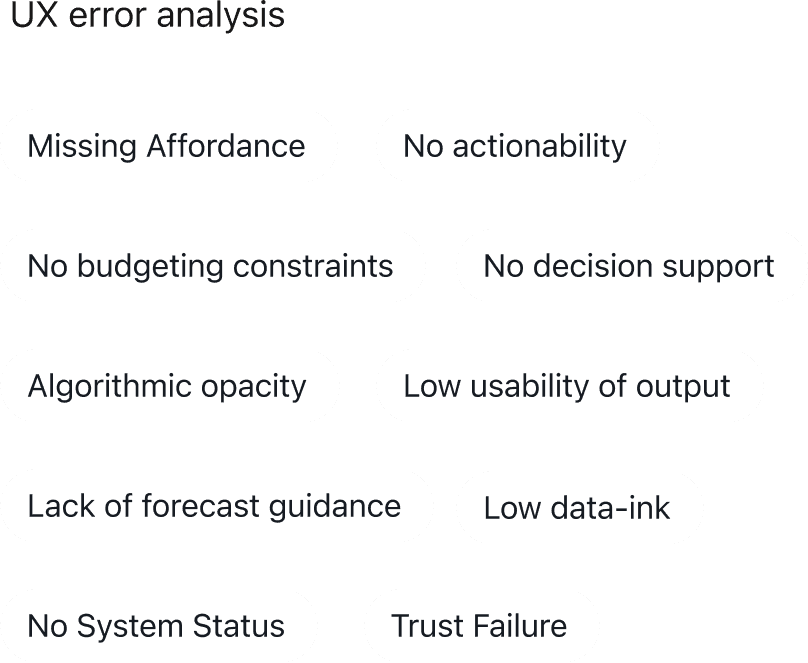
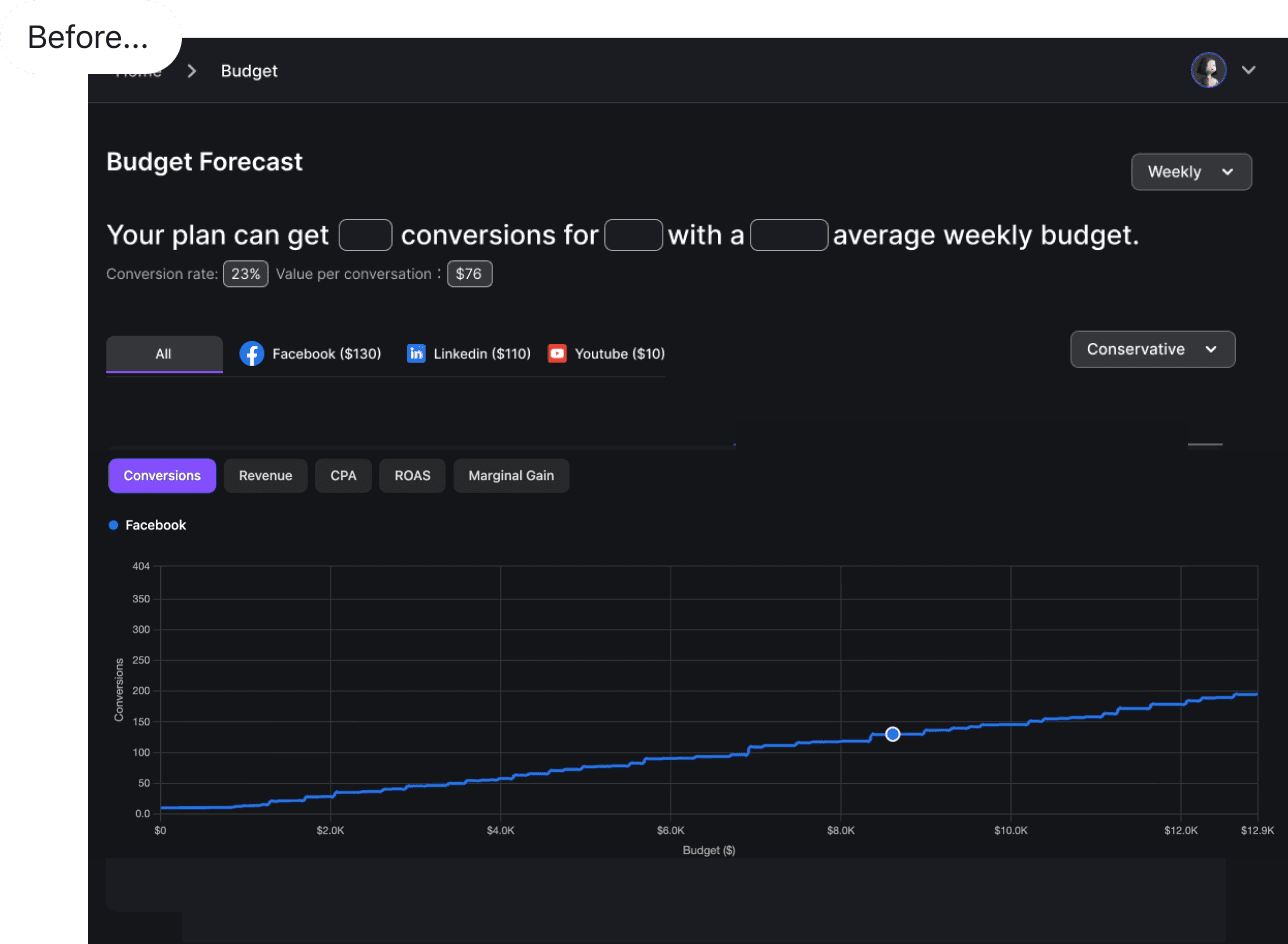
01
We realized users didn’t feel in control or confident in their inputs
02
I saw that the outputs weren’t helping users make clear decisions
03
We identified that unclear system logic was breaking user trust
01
We realized users didn’t feel in control or confident in their inputs
02
I saw that the outputs weren’t helping users make clear decisions
03
We identified that unclear system logic was breaking user trust
01
We realized users didn’t feel in control or confident in their inputs
02
The chart outputs weren’t helping users make clear decisions due to its interpretability constraints
03
We identified that unclear system logic was breaking user trust
Why it matters
AdsGency needed forecasting to drive decisions, not just display data. Only 4% active use among total paid plan users
Our goal wasn't to show numbers. It was to give marketing teams enough confidence to commit budget inside the product, and guide users with next steps. Without that, the tool had no real value in the planning workflow.
Our goal wasn't to show numbers. It was to give marketing teams enough confidence to commit budget inside the product, and guide users with next steps. Without that, the tool had no real value in the planning workflow.
Performance marketers planning $10k–$100k+ monthly ad budgets across analytics platforms
Performance marketers planning $10k–$100k+ monthly ad budgets across analytics platforms
Users
Core jobs to be done
Simulate budget allocation, see projected outcomes, and commit to a plan, without leaving the product.
Simulate budget allocation, see projected outcomes, and commit to a plan, without leaving the product.
User Decision Journey
What if your forecasting tool didn't just show you what was coming- but told you what to do about it? That's the shift I designed, and I worked with Claude.ai to poke holes in the logic before a single line of code was written.
What if your forecasting tool didn't just show you what was coming- but told you what to do about it? That's the shift I designed, and I worked with Claude.ai to poke holes in the logic before a single line of code was written.
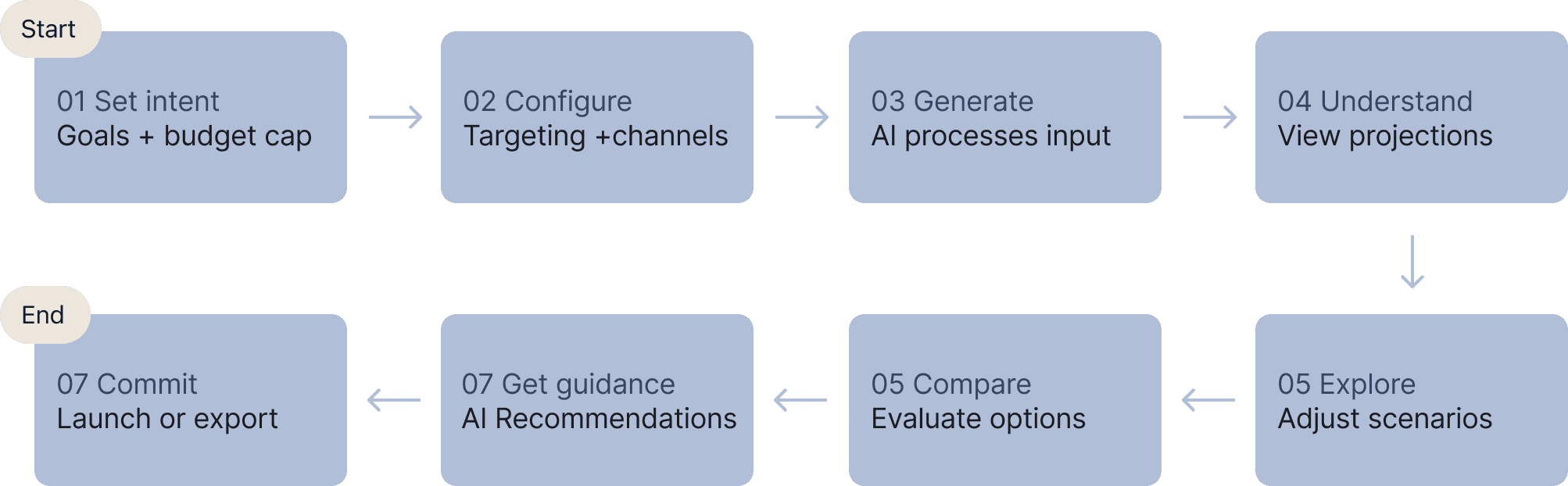
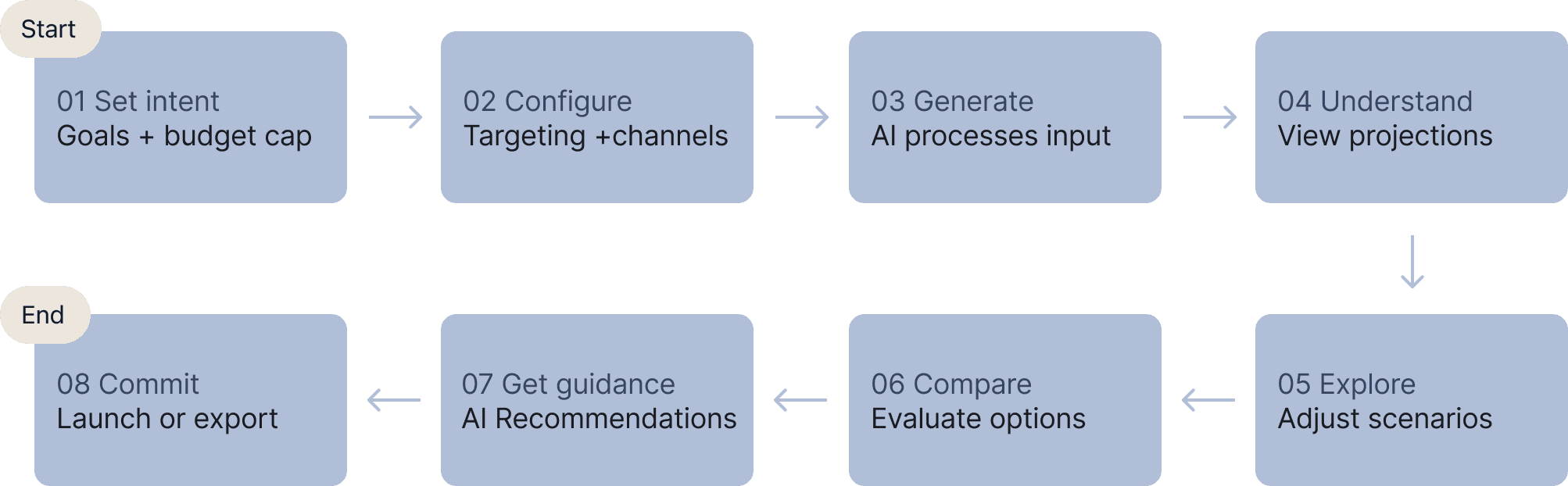
Solution: Predictive clarity from first input to final commit.
Solution: Predictive clarity from first input to final commit.
Feature 01
Focused budget input with system status visibility interaction
Our goal wasn't to show numbers. It was to give marketing teams enough confidence to commit budget inside the product, and guide users with next steps. This feature surfaces just enough of what goes into defining the budget, giving users visibility into the system without overwhelming them, so they can understand the logic, build trust, and feel confident committing spend within the product.
Our goal wasn't to show numbers. It was to give marketing teams enough confidence to commit budget inside the product, and guide users with next steps. This feature surfaces just enough of what goes into defining the budget, giving users visibility into the system without overwhelming them, so they can understand the logic, build trust, and feel confident committing spend within the product.
Feature 02
Progressive disclosure through categorized insight cards

In conversations with the team, we aligned on one thing — the output needed structure. Not everything the AI surfaces carries the same weight, so we prioritised separating insights by category. I took that decision into the design, translating it into categorised cards that give each insight type its own space.
In conversations with the team, we aligned on one thing — the output needed structure. Not everything the AI surfaces carries the same weight, so we prioritised separating insights by category. I took that decision into the design, translating it into categorised cards that give each insight type its own space.

Feature 03
Budget lock with constraint enforcement
I uncovered that users were stuck between rigid manual budgets and opaque automation, unsure what they actually controlled, so I led the introduction of budget lock to let them fix budgets for key channels while AI dynamically optimizes the rest, giving users confidence to commit spend while improving allocation efficiency across channels.
I uncovered that users were stuck between rigid manual budgets and opaque automation, unsure what they actually controlled, so I led the introduction of budget lock to let them fix budgets for key channels while AI dynamically optimizes the rest, giving users confidence to commit spend while improving allocation efficiency across channels.
Feature 04
Predicted results card group
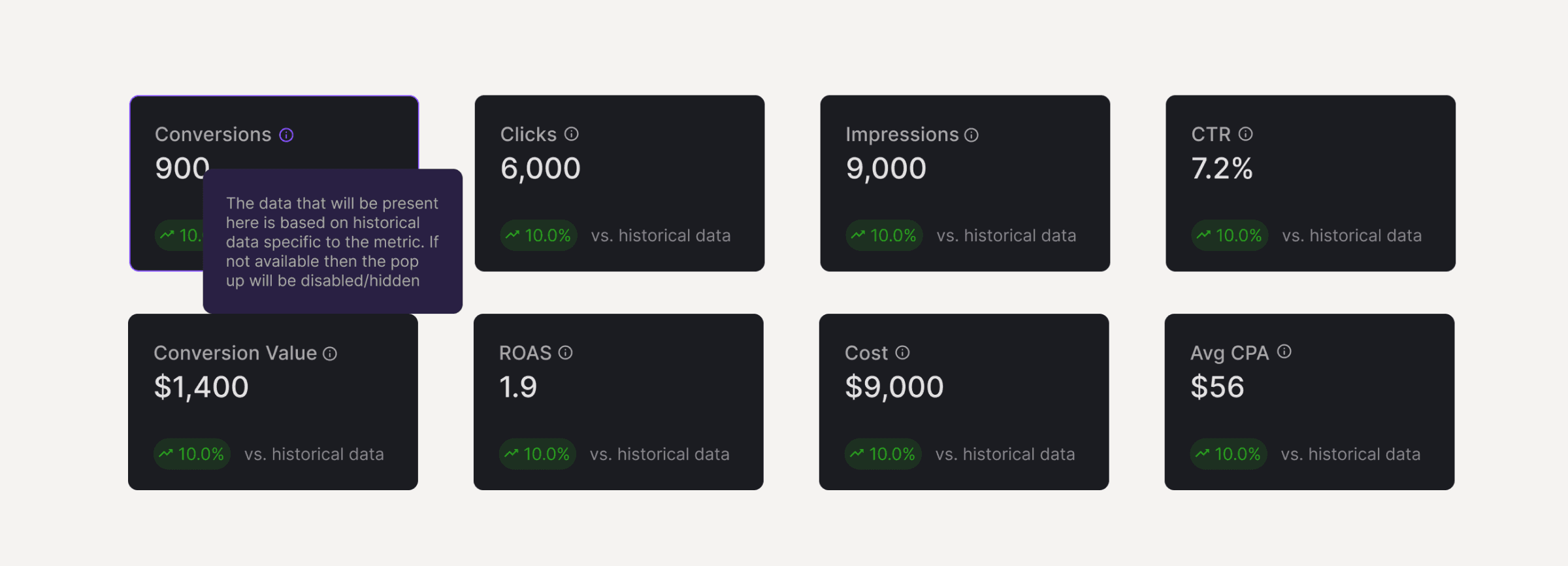
From client feedback, users needed a concrete output to react to before committing. I designed the predicted results cards so users could see exactly what their budget would return, per metric, benchmarked against their own historical data, giving them a confident answer before committing.
From client feedback, users needed a concrete output to react to before committing. I designed the predicted results cards so users could see exactly what their budget would return, per metric, benchmarked against their own historical data, giving them a confident answer before committing.
Feature 05
Skeleton screen and error states
Before I introduced this, users landed on a completely blank screen with no context on what the feature was or what would appear next. I designed a skeleton state that previews the structure of the experience upfront, so users immediately understand what the feature is and what they’re about to interact with, even before the data loads. And if the tool errors out, you recover from where you left off, no lost work, which keeps that trust intact
Before I introduced this, users landed on a completely blank screen with no context on what the feature was or what would appear next. I designed a skeleton state that previews the structure of the experience upfront, so users immediately understand what the feature is and what they’re about to interact with, even before the data loads. And if the tool errors out, you recover from where you left off, no lost work, which keeps that trust intact
Feature 06
Redesigning analytics charts for clearer multi-variable readability
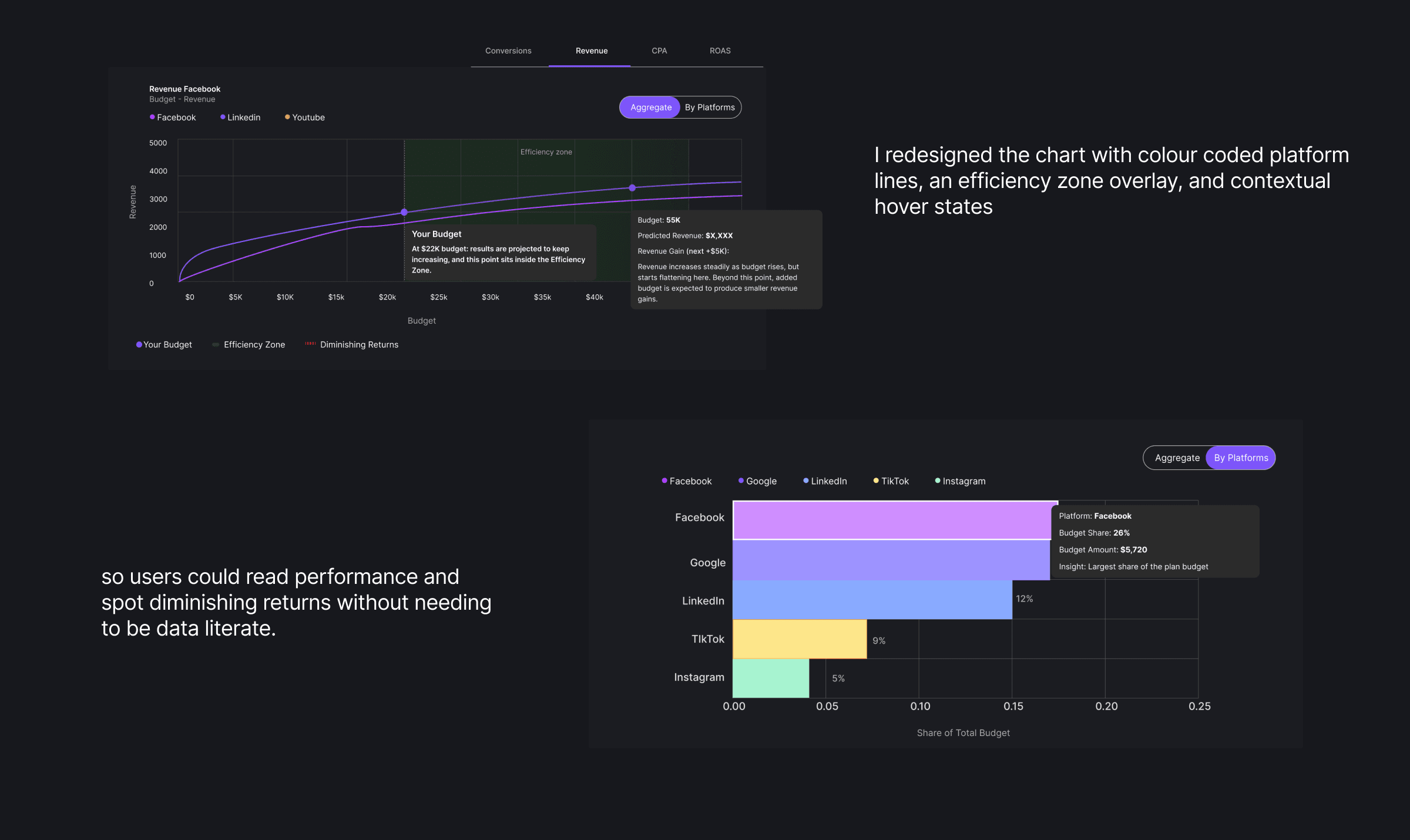
Based on backend capacity, we designed the forecasting charts such that users can scenario-plan, drag to test budgets, see the per-platform breakdown, and get an AI nudge on where to shift spend
Based on backend capacity, we designed the forecasting charts such that users can scenario-plan, drag to test budgets, see the per-platform breakdown, and get an AI nudge on where to shift spend
User Impact
User Impact
"This is giving our users the confidence to make decisions inside the product instead of taking the data elsewhere."
Business Impact
Business Impact
70% Paid plan clients onboarded to feature with a 4.5 CSAT score
My thoughts
My thoughts
Working on developer AI tools made me a sharper prompter, and I bring that directly into my design process. Tools like Claude and Cursor helped me rapidly wireframe ideas, pressure-test flows, and generate prototype code for dev handoff. It's not just faster- the work stays grounded in user needs, and that clarity is what drives the speed.
Designing and built with purpose | © 2025 by Divya Mavinkurve